WHY PRIESTS WEAR DIFFERENT COLORS AT MASS (AND WHAT THEY MEAN)


WHY PRIESTS WEAR DIFFERENT COLORS AT MASS (AND WHAT THEY MEAN)
INTRODUCTION
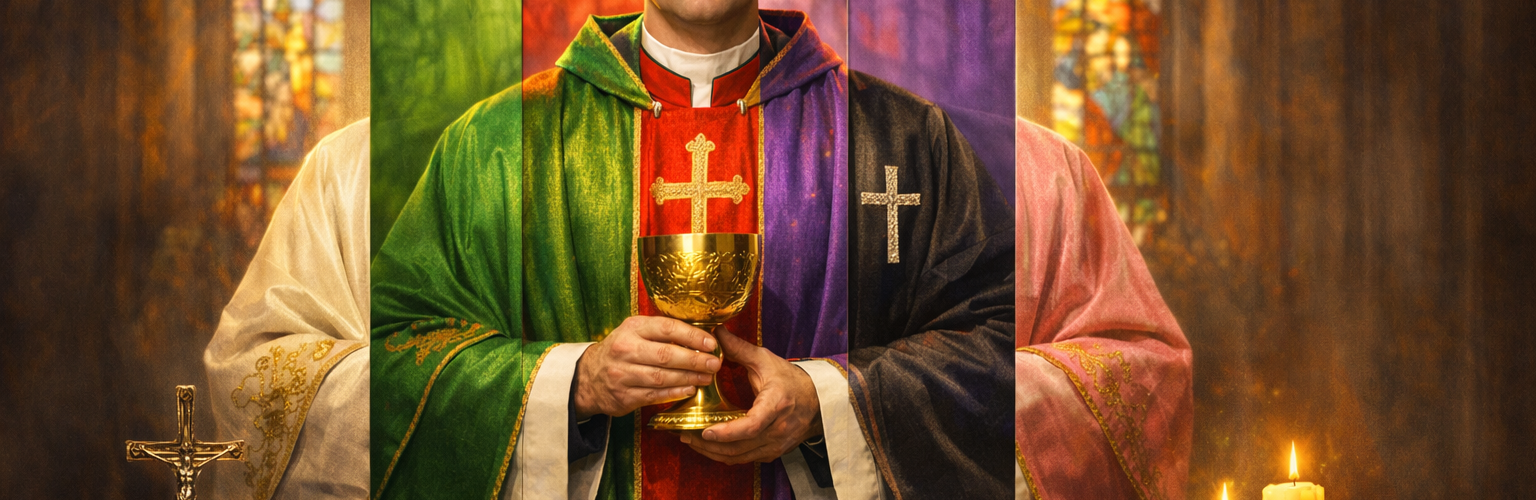
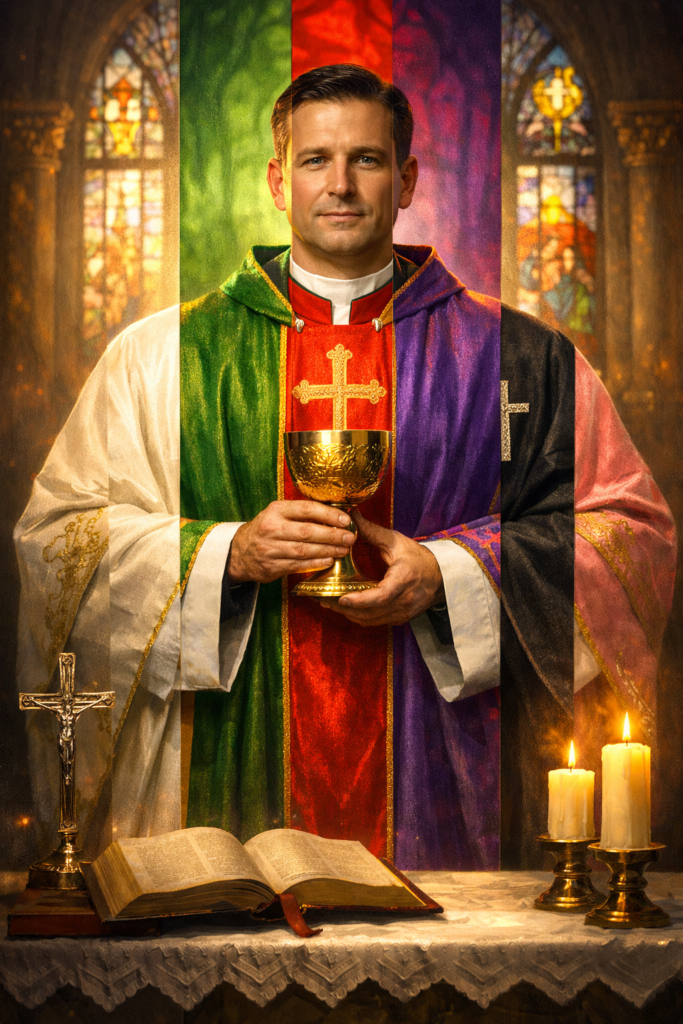
If you attend Mass regularly, you’ve probably noticed that the priest’s vestments change color depending on the day. One Sunday it’s green, another it’s purple, and on special occasions, bright white or red. These colors are not chosen for style or preference—they are part of a deeply meaningful system that reflects the rhythm of Catholic worship. Rooted in tradition and guided by the liturgical calendar, these colors help communicate the spiritual tone of each celebration even before a word is spoken.
WHAT DETERMINES THE COLOR AT MASS
The colors worn by priests are determined by the liturgical calendar established by the Catholic Church. This calendar organizes the entire Church year around the life of Jesus Christ, including His birth, ministry, death, and resurrection, as well as the lives of the saints. Each day is assigned specific readings, prayers, and corresponding liturgical colors, all outlined in official texts like the Roman Missal. Priests do not choose colors freely; they follow what is prescribed for that particular day or celebration.
THE MAIN LITURGICAL COLORS AND THEIR MEANINGS
WHITE (AND GOLD)
White symbolizes joy, purity, and victory. It is used during the most celebratory seasons of the Church, such as Christmas and Easter. It is also worn on feast days of saints who were not martyrs, as well as solemnities like the Trinity. Gold may be used as a more festive substitute for white on especially important occasions, emphasizing the glory and triumph of Christ.
GREEN
Green is the most commonly seen color throughout the year. It is used during Ordinary Time, which makes up the majority of the liturgical calendar. This season focuses on the growth and development of the Christian life. The color green reflects hope, spiritual growth, and perseverance in everyday faith.
RED
Red is a powerful and striking color that represents both sacrifice and the fire of the Holy Spirit. It is used on feasts of martyrs, who gave their lives for the faith, as well as on Pentecost, when the Holy Spirit descended upon the apostles. It is also worn on Palm Sunday and Good Friday, connecting the color to Christ’s passion and death.
PURPLE (VIOLET)
Purple, also called violet, is associated with penance, reflection, and preparation. It is used during the seasons of Advent and Lent, times when Catholics are called to prepare their hearts through prayer, fasting, and repentance. The subdued tone of purple invites a more serious and introspective spirit.

BLACK
Black is traditionally used for funerals and All Souls’ Day, symbolizing mourning and remembrance of the dead. While it is less commonly seen today—often replaced by white or violet—it still holds a place in the Church’s tradition as an expression of grief and solemnity.
ROSE (OPTIONAL)
Rose is a rare color used only twice a year: on Gaudete Sunday during Advent and Laetare Sunday during Lent. It represents a moment of joy and encouragement in the middle of seasons that are otherwise penitential. It serves as a reminder that celebration is near.
ARE THE COLORS THE SAME WORLDWIDE
For the most part, the liturgical colors are the same across the world because the Church follows a universal calendar. Whether you attend Mass in Cebu City or in Rome, the assigned color for a given day is generally the same. However, small variations do exist. In some cultures, white may be used instead of black for funerals, reflecting local customs surrounding mourning. Additionally, different regions may celebrate local saints, which can affect the color used on certain days. These adaptations allow the Church to respect cultural diversity while maintaining overall unity.
WHY DOES THE CHURCH USE DIFFERENT COLORS
The use of different colors serves as a visual language that communicates the meaning of each liturgical season. Even without hearing the readings or prayers, the color alone can signal whether the Church is celebrating, mourning, or preparing. This system helps the faithful stay connected to the spiritual rhythm of the year. It also engages the senses, making worship a fuller and more immersive experience. The changing colors remind Catholics that their faith is not static but a journey marked by different seasons and moments.
COMMON QUESTIONS CATHOLICS ASK
Many Catholics wonder whether priests can choose their vestment colors. The answer is no; they are expected to follow the prescribed color for the day. Others ask why gold sometimes replaces white—this is allowed for more solemn celebrations. Some may notice differences between parishes, which are often due to local customs or specific feast days. Another common question is whether vestments are optional; in reality, they are an essential part of the liturgy and carry deep symbolic meaning.
HOW TO PAY ATTENTION TO LITURGICAL COLORS
Being aware of liturgical colors can deepen your participation in the Mass. By noticing the color of the vestments, you can immediately understand the tone of the celebration. You can also connect the color with the readings and prayers of the day, allowing for a more meaningful experience. Over time, this awareness helps you follow the story of salvation as it unfolds throughout the Church year.
CONCLUSION
The different colors worn by priests at Mass are far more than decorative choices. They are rich in symbolism, rooted in tradition, and carefully guided by the Church’s liturgical calendar. Through these colors, the Church communicates joy, sorrow, hope, and preparation in a way that is both simple and profound. By paying attention to them, Catholics can gain a deeper appreciation of the beauty and meaning of the Mass.

