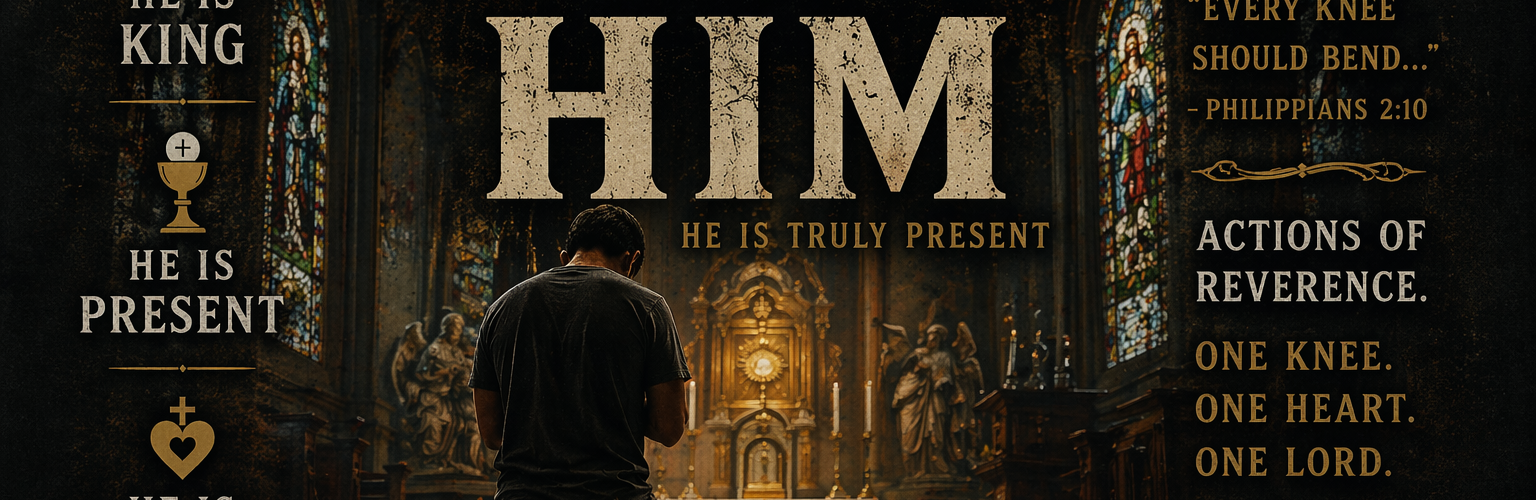
Why Catholics Genuflect: A Simple Gesture, A Profound Encounter


Why Catholics Genuflect: A Simple Gesture, A Profound Encounter
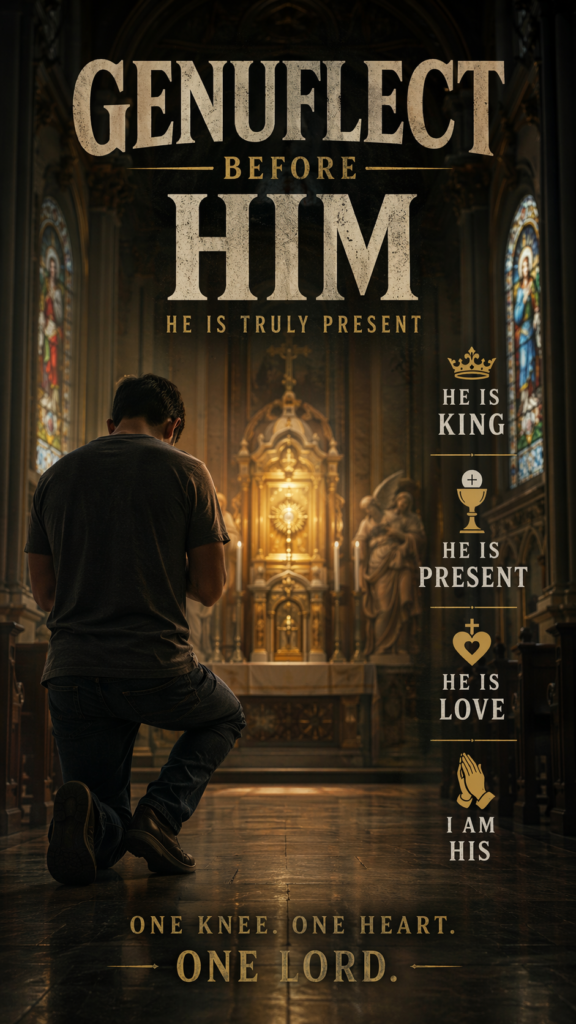
Introduction
There is a quiet moment many Catholics experience without thinking much about it. You walk into a church, dip your fingers into holy water, and before stepping into the pew, you bend one knee to the ground.
It is quick. Almost automatic.
But behind that small gesture lies something deeply sacred—an act of love, humility, and recognition of God’s presence.
What Is Genuflection?
Genuflection is the act of bending one knee—specifically the right knee—to the ground as a sign of reverence.
For Catholics, this gesture is not just a custom or habit. It is directed toward someone: Jesus Christ, truly present in the Eucharist, reserved in the tabernacle.
When a Catholic genuflects, they are not simply acknowledging a symbol. They are acknowledging a Presence.
It is, in a sense, a silent prayer of the body:
“My Lord and my God.”
A Gesture Rooted in Worship
From the earliest times, kneeling has been a sign of adoration and surrender. Scripture speaks of every knee bending before God, and throughout Christian history, believers have used their bodies to express what words cannot fully capture.
Genuflection developed as a specific act of reverence, especially as the Church deepened its understanding of Christ’s presence in the Eucharist.
Over time, this simple act became a way for the faithful to say:
“You are here, Lord—and I recognize You.”
Why Genuflection Matters
At its heart, genuflection is about relationship.
It is not about rules. It is about love.
Catholics believe in the Real Presence—that Jesus is truly, really, and substantially present in the Eucharist. Not as a symbol, but as a living reality.
So when we genuflect, we are doing something deeply personal:
- We humble ourselves before Christ
- We acknowledge His kingship
- We place ourselves, even briefly, in an attitude of worship
In a world that constantly tells us to stand tall, be self-sufficient, and depend only on ourselves, genuflection quietly teaches the opposite:
You are not the center. God is.
A Prayer of the Body
We often think of prayer as words or thoughts. But the human person is not just a mind—we are body and soul.
Genuflection reminds us that worship involves our whole being.
The bending of the knee becomes:
- A confession of faith
- A moment of surrender
- A physical “yes” to God
Even when no words are spoken, the gesture itself speaks volumes.

Do We Really Need to Genuflect?
It’s a fair question, especially today.
Some might ask: If I believe in God in my heart, isn’t that enough?
The Church teaches that interior faith is essential—but it also invites us to express that faith outwardly.
Genuflection is not about obligation for its own sake. It is about forming the heart through the body.
Still, there is understanding and compassion:
- Those who are physically unable are not required to genuflect
- A simple bow can take its place
God does not measure the depth of your faith by how low your knee goes—but by the sincerity of your heart.
And yet, when we can genuflect, the act becomes a gift:
A way to train our hearts in humility and awareness of God’s presence.
A Small Gesture in a Distracted World
Today, life moves fast. We rush from one place to another, often without pausing.
Genuflection interrupts that rush.
It creates a moment—a brief but powerful pause—that says:
“Something sacred is here.”
In that second of stillness, we remember:
- God is present
- This place is holy
- We are entering into something greater than ourselves
It may be small, but it is not insignificant.
When It Becomes Routine
Like many spiritual practices, genuflection can become automatic.
We bend the knee, but our hearts are elsewhere.
Yet even then, the gesture has value—it gently calls us back.
Each genuflection is an invitation:
- To be more aware
- To be more reverent
- To love more deeply
It is never too late to rediscover its meaning.
Conclusion
Genuflection is simple. Quiet. Easy to overlook.
And yet, it carries a depth that touches the core of Catholic faith.
Do we need to genuflect?
Perhaps not in the sense of strict necessity.
But we need what it teaches us:
- Humility
- Reverence
- Awareness of God’s presence
In bending the knee, we lift the heart.
And in that small act, we encounter something eternal.

