WHEN TRUTH IS HARD TO ACCEPT


CATHOLIC DAILY GOSPEL REFLECTION FOR TODAY, MARCH 9, 2026
GOSPEL PASSAGE: LUKE 4:24–30
LITURGICAL DAY/FEAST: MONDAY OF THE SECOND WEEK OF LENT
REFLECTION TITLE
WHEN TRUTH IS HARD TO ACCEPT
FEATURED GOSPEL (DOUAY-RHEIMS)
Luke 4:24–30
And he said: Amen I say to you, that no prophet is accepted in his own country.
In truth I say to you, there were many widows in the days of Elias in Israel, when heaven was shut up three years and six months, when there was a great famine throughout all the earth.
And to none of them was Elias sent, but to Sarepta of Sidon, to a widow woman.
And there were many lepers in Israel in the time of Eliseus the prophet: and none of them was cleansed but Naaman the Syrian.
And all they in the synagogue, hearing these things, were filled with anger.
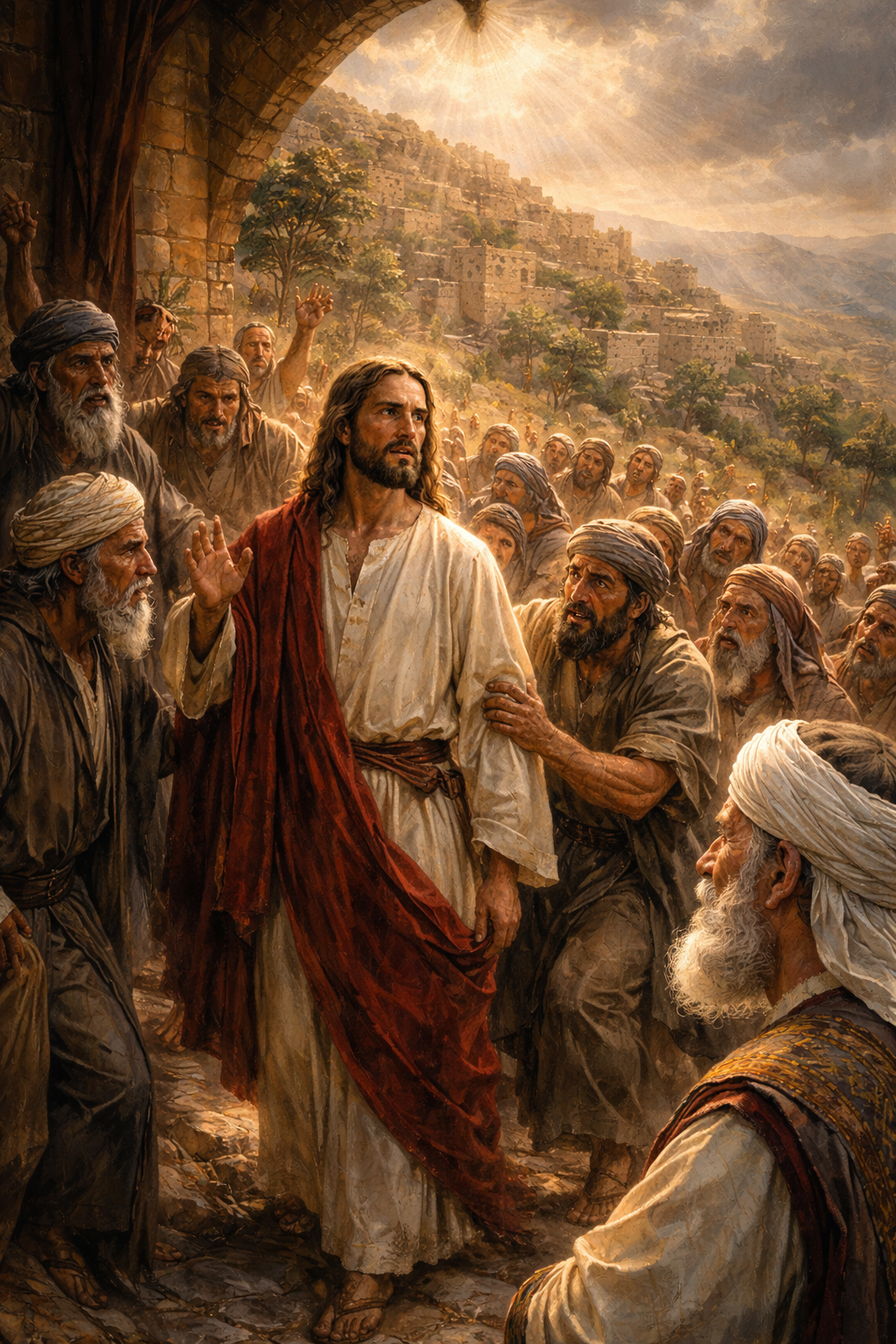
And they rose up and thrust him out of the city: and they brought him to the brow of the hill, whereon their city was built, that they might cast him down headlong.
But he passing through the midst of them, went his way.
OPENING REFLECTION
Truth can be uncomfortable. When God speaks to our hearts, He sometimes challenges our assumptions, our pride, or our expectations.
In today’s Gospel, Jesus speaks to the people of Nazareth—His own hometown. Instead of welcoming Him, they become angry at His message. What began as admiration quickly turns into rejection.
This story reminds us that God’s truth often invites us to change. And change is not always easy.
UNDERSTANDING THE GOSPEL
Historical and Biblical Context
This passage occurs early in Jesus’ public ministry. After reading from the prophet Isaiah in the synagogue of Nazareth, Jesus declares that the prophecy is fulfilled in Him.
At first, the people admire Him. But when Jesus reminds them of stories from the Old Testament—how God helped outsiders like the widow of Sidon and Naaman the Syrian—they become furious.
Why? Because Jesus is revealing that God’s mercy is not limited to one group of people. His salvation is meant for all.
The Message Jesus Is Communicating
Jesus is challenging the narrow expectations of His listeners. They believed that God’s blessings belonged primarily to them.
But Jesus points out that faith, not nationality or familiarity, opens the door to God’s grace.
The tragedy is that those who knew Jesus best were the ones most unwilling to accept Him.
Important Symbols and Imagery
Nazareth – represents familiarity and spiritual complacency
The widow of Sidon and Naaman the Syrian – symbols of God’s grace reaching outsiders
The cliff outside the city – the rejection of truth and the beginning of hostility toward Jesus
Despite the crowd’s anger, Jesus “passed through the midst of them,” showing that God’s mission cannot be stopped by human rejection.
ORIGINAL LANGUAGE INSIGHT
In verse 24, Jesus says:
“No prophet is accepted in his own country.”
The Greek word “dektos” (δεκτός) means accepted, welcomed, or received favorably.

Jesus is highlighting a painful truth: familiarity often breeds resistance. People sometimes struggle to receive God’s message when it comes through someone they think they already know.
INSIGHT FROM THE CHURCH
St. John Chrysostom noted that the people of Nazareth rejected Jesus not because they lacked evidence, but because their pride prevented them from believing.
The Church Fathers often teach that spiritual blindness is not caused by lack of truth but by a hardened heart.
Throughout history, saints have also experienced rejection when proclaiming God’s message. Yet they continued faithfully because they trusted God’s mission more than human approval.
WHAT THIS GOSPEL MEANS FOR US TODAY
This Gospel challenges us to examine our own hearts.
Sometimes we resist God’s message because it confronts our comfort or our expectations. We may ignore advice, correction, or spiritual guidance simply because it comes from someone familiar.
Yet God often speaks through ordinary people:
a family member
a friend
a priest
even a stranger
Lent is a time when the Lord gently invites us to open our hearts again.
Instead of reacting with resistance, we can ask:
“Lord, what are You trying to teach me today?”
When we listen with humility, God’s Word becomes a source of transformation rather than conflict.
LIVING THE GOSPEL TODAY
1. Practice openness to God’s message
Be willing to hear God’s truth even when it challenges you.
2. Examine your heart
Ask God to reveal any pride or resistance that prevents spiritual growth.
3. Welcome God’s grace for everyone
Remember that God’s love and mercy are meant for all people.
SHAREABLE FAITH QUOTE
“God’s truth transforms us when we choose humility over pride.”
CONCLUDING THOUGHT
The people of Nazareth rejected Jesus because they could not accept that God was working in ways beyond their expectations. Their familiarity blinded them to the truth standing before them.
Today, Christ continues to speak to our hearts. If we approach Him with humility and openness, we will discover that His Word is not meant to condemn us—but to guide us into deeper faith and freedom.
CLOSING PRAYER
Lord Jesus,
Help me to receive Your Word with humility and faith.
Remove any pride or resistance from my heart so that I may recognize Your voice.
Teach me to welcome Your truth and to trust Your plan for my life.
May Your grace transform my heart each day.
Amen.
PRAYER REQUEST
To sign up at the link below for your Prayer Request and we will light a candle and pray for you:
https://praynonstopnow.com/pr/sign.php
SUBSCRIBE INVITATION
Grow deeper in your relationship with God and strengthen your daily prayer life by joining the PRAY UNCEASINGLY YouTube channel.
Be part of a worldwide community of believers seeking God through prayer, Scripture, and reflection each day.
Subscribe here:
https://www.youtube.com/c/PrayUnceasingly

