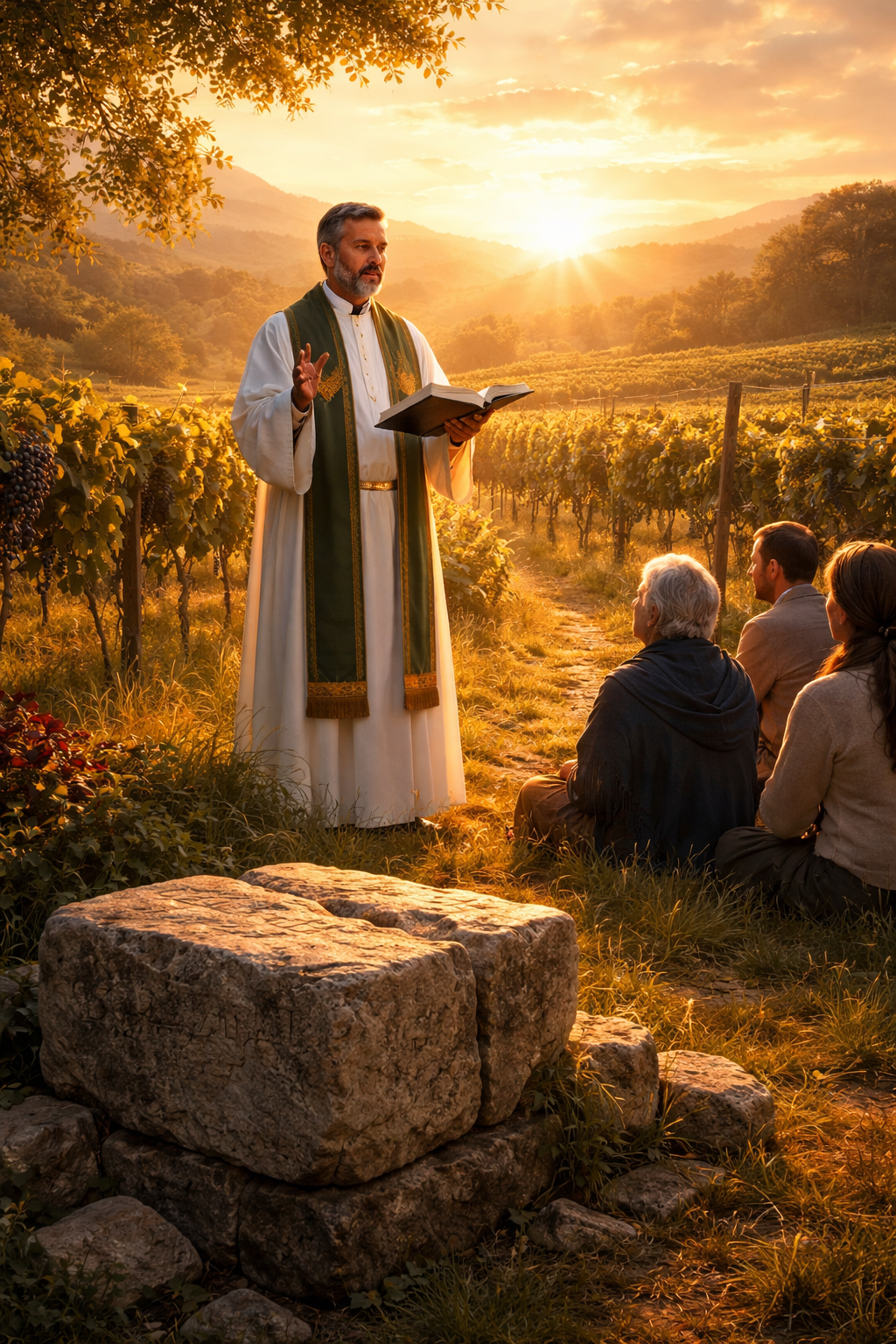
THE REJECTED STONE THAT BECOMES THE CORNERSTONE


THE REJECTED STONE THAT BECOMES THE CORNERSTONE
FEATURED GOSPEL (DOUAY-RHEIMS)
“The stone which the builders rejected, the same is become the head of the corner. By the Lord this has been done, and it is wonderful in our eyes.
Therefore I say to you, that the kingdom of God shall be taken from you, and shall be given to a nation yielding the fruits thereof.”
(Matthew 21:42-43, Douay-Rheims)
OPENING REFLECTION
There are moments in life when something valuable is overlooked or rejected. Sometimes people dismiss what appears ordinary, only to realize later its true worth. In today’s Gospel, Jesus speaks a powerful parable that reveals how humanity often rejects the very gift God sends for salvation.
Christ invites us to reflect deeply: Are we welcoming God’s work in our lives, or are we unknowingly resisting it? The Gospel challenges us to examine our hearts and recognize Jesus as the cornerstone of our lives.
UNDERSTANDING THE GOSPEL
In this passage from Matthew, Jesus tells the Parable of the Wicked Tenants. A landowner plants a vineyard and entrusts it to tenants. When the time comes for harvest, he sends servants to collect the fruits, but the tenants beat, stone, and kill them. Finally, the landowner sends his own son, thinking they will respect him. Instead, the tenants kill him as well, hoping to seize the inheritance.
Historical and Biblical Context
Jesus tells this parable during His final days in Jerusalem, addressing the chief priests and Pharisees who challenge His authority. The story is symbolic:
- The vineyard represents Israel, God’s chosen people (a familiar image from Isaiah 5).
- The servants represent the prophets sent by God.
- The son clearly represents Jesus Himself.
- The wicked tenants symbolize the leaders who rejected God’s messengers.
The Message Jesus Communicates
Jesus warns that rejecting God’s messengers—and ultimately rejecting the Son—has consequences. The Kingdom of God is not about privilege but about bearing fruit. Those who refuse God’s call will lose what was entrusted to them.
Important Symbols
- The vineyard – God’s covenant relationship with His people
- The harvest – the fruits of righteousness and faithfulness
- The cornerstone – Christ as the foundation of salvation
Though rejected and crucified, Jesus becomes the cornerstone upon which the Church is built.
ORIGINAL LANGUAGE INSIGHT
The Greek word for cornerstone in this passage is “kephalē gōnias” (κεφαλὴ γωνίας), meaning “head of the corner.”
In ancient construction, the cornerstone was the most important stone in a building. It aligned the entire structure and ensured stability. Without it, the building could not stand.
By using this term, Jesus reveals that He is not merely part of God’s plan—He is the essential foundation upon which God’s Kingdom stands.

INSIGHT FROM THE CHURCH
Early Church Fathers frequently reflected on this passage.
St. Augustine wrote that the rejected stone becoming the cornerstone symbolizes the union of Jews and Gentiles in Christ. Two walls meet at a corner, and Christ joins humanity together in one Church.
Similarly, St. Irenaeus taught that Christ recapitulates all history in Himself. Though rejected by many, He becomes the foundation of the new covenant community.
This reminds us that God’s plan often unfolds in ways the world does not expect. What appears to be defeat—Christ’s crucifixion—becomes the triumph of salvation.
WHAT THIS GOSPEL MEANS FOR US TODAY
The parable speaks directly to our modern spiritual lives.
God has entrusted each of us with a “vineyard”—our lives, relationships, gifts, and responsibilities. He asks us to bear fruit through love, justice, faith, and mercy.
Yet we sometimes behave like the tenants in the story:
- Ignoring God’s voice
- Rejecting correction
- Living as if everything belongs to us rather than to God
The Gospel reminds us that faith is not only about receiving blessings but producing spiritual fruit.
Christ must be the cornerstone of our lives. When He is not the foundation, our priorities become disordered—success replaces service, comfort replaces sacrifice, and pride replaces humility.
But when Christ is the cornerstone, everything aligns: our decisions, our relationships, and our purpose.
This Gospel also brings hope. Even if we have rejected Christ in the past through sin or indifference, God continues to invite us back into the vineyard. His mercy always offers another chance to bear fruit.
LIVING THE GOSPEL TODAY
- Examine the “vineyard” God has entrusted to you.
Reflect on your family, work, and responsibilities. Ask how you can bear more spiritual fruit there. - Make Christ the cornerstone of your daily decisions.
Begin the day with prayer and ask Jesus to guide your choices. - Respond to God’s call rather than resisting it.
When you feel the Holy Spirit prompting you to forgive, serve, or change, act on it.
SHAREABLE FAITH QUOTE
“The stone the world rejects is the foundation of our salvation—build your life upon Christ.”
CONCLUDING THOUGHT
The Gospel reminds us that God’s Kingdom belongs to those who welcome His Son and bear fruit through faithful living. Though Jesus was rejected by many, He became the cornerstone of salvation. When we build our lives upon Him, we discover a foundation that can never crumble.
CLOSING PRAYER
Lord Jesus,
You are the cornerstone of our faith and the foundation of our hope.
Help us to welcome Your word and bear the fruits of love, justice, and mercy.
Remove from our hearts any resistance to Your will.
Teach us to build our lives firmly upon You,
so that everything we do may glorify the Father.
Amen.

