UNDERSTANDING THE CATHOLIC MASS: A COMPLETE GUIDE FOR THE FAITHFUL


UNDERSTANDING THE CATHOLIC MASS: A COMPLETE GUIDE FOR THE FAITHFUL
INTRODUCTION: WHY THE MASS MATTERS
The Holy Mass stands at the very heart of the life of the Catholic Church, described as the “source and summit” of Christian worship. It is far more than a weekly obligation or a routine gathering—it is a profound encounter with God Himself. In the Mass, heaven and earth meet, and the faithful are invited into the mystery of Christ’s sacrifice, made present again in an unbloody manner upon the altar. Every word, gesture, and silence carries deep meaning, drawing believers into a sacred rhythm of prayer, thanksgiving, and communion with the Divine.
THE STRUCTURE OF THE MASS (STEP-BY-STEP OVERVIEW)
INTRODUCTORY RITES
The Mass begins with the Introductory Rites, where the faithful gather as one body in Christ. The entrance procession, accompanied by a hymn, sets a tone of reverence and unity. The Sign of the Cross reminds us of our baptism and identity in the Holy Trinity. Through the Penitential Act, we humbly acknowledge our sins, preparing our hearts to encounter God. The Gloria, sung on Sundays and feast days, lifts our voices in praise, and the Opening Prayer unites the intentions of the congregation. These rites are not mere formalities; they prepare us spiritually to enter into sacred worship.
LITURGY OF THE WORD
In the Liturgy of the Word, God speaks directly to His people through Sacred Scripture. The readings—from the Old Testament, the Psalms, the New Testament, and the Gospel—form a continuous narrative of salvation history. The Gospel holds a place of honor, as it recounts the life and teachings of Jesus Christ. The homily breaks open the Word, helping the faithful apply it to daily life. The Creed affirms our shared beliefs, and the Prayer of the Faithful lifts the needs of the world to God. This part of the Mass calls for attentive listening, as it is God Himself who addresses His people.
LITURGY OF THE EUCHARIST
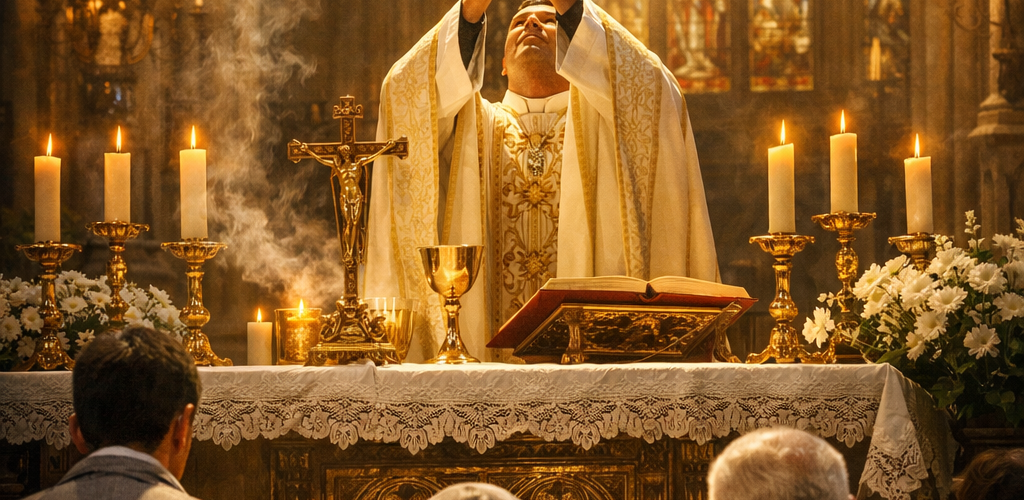
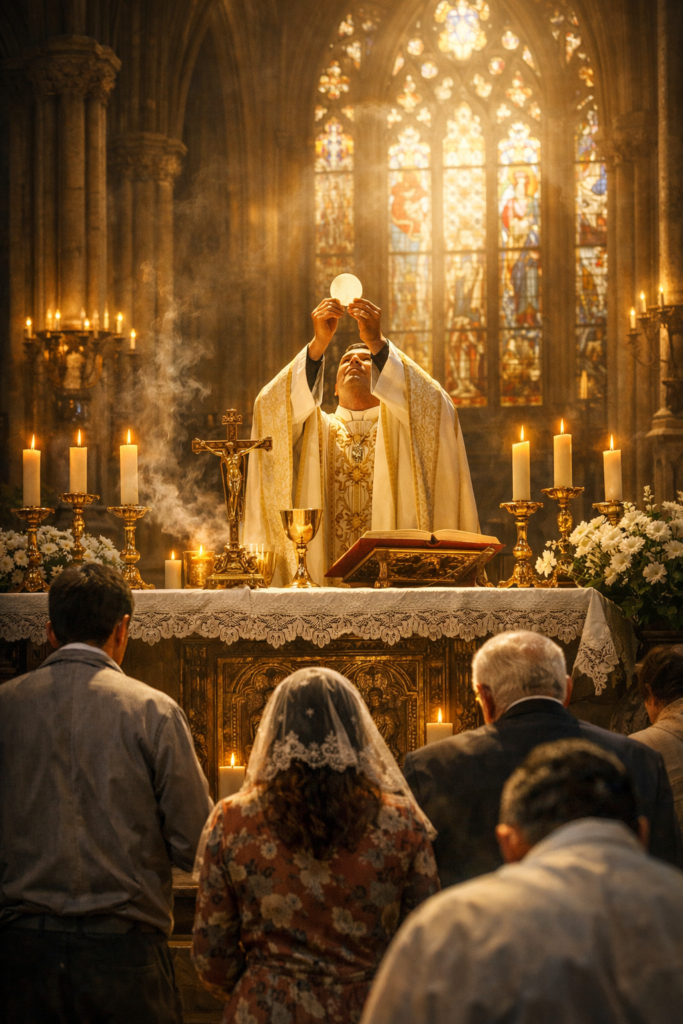
The Liturgy of the Eucharist is the very center and summit of the Mass. Bread and wine are brought to the altar, symbolizing both human labor and divine providence. During the Eucharistic Prayer, the priest, acting in the person of Christ, invokes the Holy Spirit. At the Consecration, the bread and wine truly become the Body and Blood of Jesus Christ. This is not symbolic—it is the Real Presence. The sacrifice of Christ on Calvary is made present, inviting the faithful to unite their own lives and sufferings with His perfect offering.
COMMUNION RITE
The Communion Rite prepares the faithful to receive Jesus Himself. The Lord’s Prayer unites the assembly in the words Christ taught us. The Sign of Peace reflects reconciliation and unity within the community. As the Lamb of God is sung, we acknowledge Christ as the one who takes away the sins of the world. Receiving Holy Communion is the most intimate moment of the Mass, where the faithful are nourished by Christ’s Body and Blood. It is a sacred encounter that calls for reverence, gratitude, and a state of grace.
CONCLUDING RITES
The Mass concludes with a blessing and dismissal. Yet, this ending is also a beginning. The faithful are sent forth to live the Gospel in their daily lives. The words “Go forth, the Mass is ended” remind us that what we have received must now be shared through our actions, words, and witness.

WHY EVERY PART OF THE MASS IS SACRED
Every element of the Mass is deeply sacred because it participates in divine reality. The prayers are rooted in Scripture, the gestures are steeped in tradition, and the entire structure reflects centuries of faith. Even moments of silence are intentional, allowing the soul to listen and respond to God. Nothing in the Mass is accidental; each part contributes to a greater whole that reveals the mystery of salvation.
WHAT THE FAITHFUL SHOULD KNOW ABOUT THE MASS
The Mass is not entertainment or a performance—it is an act of worship. The faithful are called to active participation, which means engaging both outwardly and inwardly. This includes listening attentively, responding in prayer, and opening one’s heart to God’s grace. The Real Presence of Christ in the Eucharist is central, and understanding this truth transforms how one approaches the Mass.
WHAT TO DO DURING MASS
Preparation begins even before arriving at church. Coming early allows time for silent prayer and recollection. During the Mass, the faithful should participate fully—singing, responding, and listening with intention. Observing proper postures, such as standing, sitting, and kneeling, expresses unity and reverence. After receiving Communion, it is important to spend time in thanksgiving, recognizing the profound gift received.
WHAT NOT TO DO DURING MASS
Distractions can diminish the sacredness of the Mass. Using phones, engaging in unnecessary conversation, or treating the liturgy casually detracts from worship. Arriving late or leaving early without serious reason disrupts the communal nature of the celebration. Receiving Communion without proper spiritual preparation, especially in a state of grave sin, is also to be avoided. The Mass calls for intentional reverence and focus.
WHY DO WE KNEEL?
Kneeling is a powerful expression of adoration, humility, and reverence. It is a physical acknowledgment of God’s greatness and our dependence on Him. Rooted in biblical tradition, kneeling reflects the posture of worship seen throughout salvation history. During the Consecration, when Christ becomes truly present on the altar, kneeling signifies deep reverence for this sacred mystery.
THE DEEPER MEANING OF THE EUCHARIST
The Eucharist is the heart of the Mass and the greatest gift given to the Church. It is not merely symbolic but truly the Body, Blood, Soul, and Divinity of Jesus Christ. Through it, the faithful are united with Christ and with one another. It strengthens the soul, forgives venial sins, and deepens one’s relationship with God.
COMMON MISUNDERSTANDINGS ABOUT THE MASS
Some may view the Mass as repetitive or fail to find meaning in it. However, repetition in the liturgy is meant to deepen understanding and foster meditation. Others may think personal prayer is sufficient, but the Mass is unique because it is the communal and sacramental worship of the Church. Its value lies not in emotional experience alone but in its objective reality as an encounter with Christ.
HOW TO DEEPEN YOUR EXPERIENCE OF THE MASS
To grow in appreciation of the Mass, one can prepare by reading the Scriptures beforehand and reflecting on their meaning. Practicing silence and attentiveness allows for deeper prayer. Offering personal intentions during the Offertory connects daily life with the sacrifice of Christ. Spending time in Eucharistic adoration outside of Mass can also deepen one’s love for the Eucharist.
CONCLUSION: THE MASS AS A TREASURE
The Holy Mass is a priceless treasure, a moment where heaven touches earth and the faithful participate in divine life. It is the greatest form of prayer and the highest act of worship. Each Mass is an opportunity to encounter Christ, to be transformed by His grace, and to be sent forth as His witnesses in the world.

