EASTER SUNDAY: MEANING, SIGNIFICANCE, AND TRADITIONS IN THE CATHOLIC FAITH


EASTER SUNDAY: MEANING, SIGNIFICANCE, AND TRADITIONS IN THE CATHOLIC FAITH
WHAT IS EASTER SUNDAY?
Easter Sunday is the most important and sacred celebration in the Christian calendar, particularly within the Catholic Church. It commemorates the resurrection of Jesus Christ from the dead, which occurred three days after His crucifixion on Good Friday. This event is not only central to Christian theology but is also the defining moment that gives meaning to the entire faith.
For Catholics, Easter is not merely a remembrance of a past event. It is a living and transformative reality that continues to shape the spiritual lives of believers. The resurrection signifies that Jesus has conquered death, fulfilled His mission of salvation, and opened the path to eternal life for humanity.
Easter Sunday concludes the period of Lent, a 40-day season of prayer, fasting, and repentance. It also marks the culmination of Holy Week, particularly the Paschal Triduum, which includes Holy Thursday, Good Friday, and Easter Sunday. These days recount the passion, death, and resurrection of Christ, forming the heart of Catholic worship.
THE SIGNIFICANCE OF EASTER IN THE CATHOLIC FAITH
THE FOUNDATION OF CHRISTIAN BELIEF
The resurrection of Jesus is the cornerstone of the Catholic faith. Without it, Christianity would lose its essence and purpose. The resurrection confirms that Jesus is truly the Son of God and that His teachings are true. It validates His sacrifice on the cross as an act of redemption for the sins of humanity.
Catholics believe that through His resurrection, Jesus triumphed over sin and death. This victory is not just His alone—it is shared with all who believe in Him. It provides hope that death is not the end but the beginning of eternal life with God.
THE PROMISE OF SALVATION
Easter is deeply connected to the concept of salvation. Catholics believe that humanity was separated from God because of sin, but through Jesus’ death and resurrection, that relationship was restored. The resurrection demonstrates God’s immense love and mercy, offering forgiveness and a new beginning to all people.
This promise of salvation is not abstract. It is personal and transformative. It invites believers to live a life of faith, hope, and charity, knowing that they are redeemed and loved by God.
THE COMPLETION OF THE PASCHAL MYSTERY
The Paschal Mystery refers to the passion, death, resurrection, and ascension of Jesus Christ. Easter Sunday is the climax of this mystery. It reveals that suffering and death are not the final reality; rather, they lead to glory and new life.
For Catholics, participating in the Paschal Mystery means uniting their own struggles and sufferings with Christ, trusting that they too will share in His resurrection.
THE BIBLICAL FOUNDATION OF EASTER
THE RESURRECTION IN SCRIPTURE
The resurrection of Jesus is documented in all four Gospels. One of the most powerful and concise descriptions is found in the Gospel of Matthew:
“He is not here; He has risen, just as He said.” — Matthew 28:6
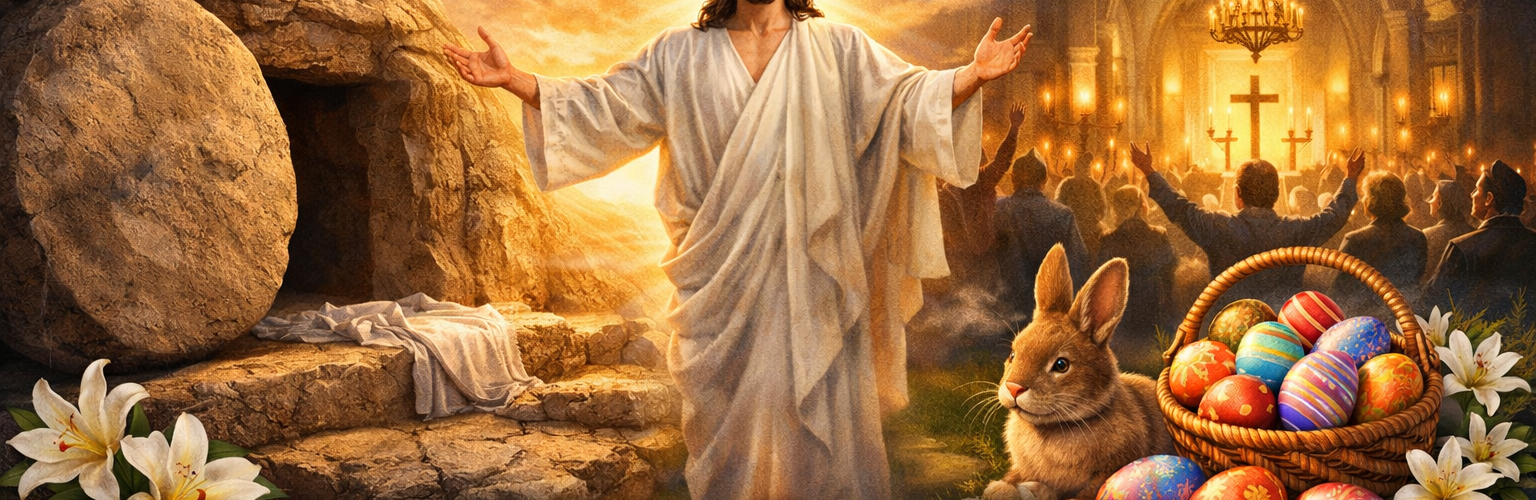
This statement, spoken by the angel at the empty tomb, captures the essence of Easter. It affirms that Jesus fulfilled His promise and overcame death. The empty tomb is a powerful symbol of victory and hope.
THE MEANING OF THE RESURRECTION
The resurrection is not just a miraculous event; it carries deep theological meaning. It signifies that Jesus has power over life and death. It also assures believers that God is faithful to His promises.
For Catholics, the resurrection is a call to transformation. It invites them to leave behind sin and embrace a new life in Christ. It is a reminder that no situation is beyond redemption and that God’s grace can bring renewal even in the darkest circumstances.
EASTER SYMBOLS: EGGS AND RABBITS EXPLAINED
THE SYMBOLISM OF EASTER EGGS
Easter eggs are one of the most recognizable symbols associated with the celebration. Their origin predates Christianity, but they have been integrated into Easter traditions in meaningful ways.
Eggs symbolize new life and rebirth. Just as a chick emerges from an egg, the resurrection represents Jesus emerging from the tomb. In many cultures, eggs are decorated in bright colors to reflect joy, celebration, and the beauty of new beginnings.
In the Catholic context, the egg can also be seen as a symbol of the sealed tomb. The cracking open of the egg represents the opening of the tomb and the victory of life over death.
THE ORIGIN OF THE EASTER BUNNY
The Easter Bunny is another popular symbol, particularly in Western cultures. Rabbits have long been associated with fertility and abundance due to their rapid reproduction. As a result, they became symbols of life and renewal during the spring season.

Although the Easter Bunny is not a religious symbol, it complements the theme of new life that is central to Easter. Over time, it has become part of cultural celebrations, especially among children, through activities like Easter egg hunts.
CULTURAL AND RELIGIOUS INTEGRATION
While eggs and rabbits have non-Christian origins, the Church has embraced them as cultural expressions that can point to deeper spiritual truths. They serve as reminders of the joy and renewal that come with the resurrection.
However, Catholics are encouraged to focus on the true meaning of Easter, ensuring that these symbols do not overshadow the central message of Christ’s victory over death.
WHY CATHOLICS CELEBRATE EASTER WORLDWIDE
A UNIVERSAL DECLARATION OF FAITH
Easter is celebrated by Catholics all over the world because it represents the core of their shared belief. Regardless of cultural differences, language, or traditions, the message remains the same: Christ has risen.
This universal celebration highlights the unity of the Catholic Church. It brings together millions of believers in a common expression of faith, joy, and hope.
A TIME OF RENEWAL AND JOY
Easter is a time of great joy and renewal. It follows the solemn and reflective season of Lent, making it a powerful contrast. The sorrow of Good Friday gives way to the joy of Easter Sunday.
For many Catholics, Easter is also a time to reconnect with family, participate in community celebrations, and reflect on their spiritual journey. It is an opportunity to begin anew, strengthened by faith.
GLOBAL TRADITIONS AND PRACTICES
Different countries have unique ways of celebrating Easter, but all share the same central message. Some attend sunrise Masses, others participate in processions, and many gather for festive meals.
Despite these variations, the essence of Easter remains unchanged. It is a celebration of life, hope, and the enduring presence of Christ in the world.
THE IMPORTANCE OF THE EASTER SUNDAY MASS
THE HIGHEST FORM OF WORSHIP
The Easter Sunday Mass is the most significant liturgical celebration in the Catholic Church. It is considered the highest form of worship, where the faithful gather to celebrate the resurrection of Jesus.
The liturgy is marked by joy, music, and proclamation. Churches are often beautifully decorated, and the atmosphere is one of celebration and reverence.
THE RENEWAL OF BAPTISMAL PROMISES
One of the key elements of the Easter Mass is the renewal of baptismal promises. The faithful reaffirm their commitment to reject sin and live according to the teachings of Christ.
This renewal is significant because baptism is seen as participation in the death and resurrection of Jesus. By renewing these promises, Catholics reaffirm their identity as followers of Christ.
THE CELEBRATION OF THE EUCHARIST
The Eucharist is at the heart of the Mass. It is the sacrament in which Catholics believe they receive the body and blood of Christ. During Easter, the Eucharist takes on even deeper meaning, as it celebrates not only Christ’s sacrifice but also His victory over death.
Through the Eucharist, believers are united with the risen Christ and with one another. It strengthens their faith and nourishes their spiritual lives.
PROCLAMATION OF THE RESURRECTION
The readings and prayers during the Easter Mass focus on the resurrection. They recount the discovery of the empty tomb and the appearances of the risen Christ.
These proclamations are not just historical accounts; they are living words that continue to inspire and transform the faithful. They remind Catholics that the resurrection is not only something to be remembered but something to be lived.
CONCLUSION
Easter Sunday stands at the heart of the Catholic faith. It is the celebration of Jesus Christ’s resurrection, a событие that changed the course of history and continues to transform lives today. Through the resurrection, Catholics find hope, meaning, and the promise of eternal life.
From its deep theological significance to its rich cultural traditions, Easter is a multifaceted celebration that speaks to both the mind and the heart. Whether through the solemn beauty of the Mass or the joyful symbolism of eggs and festivities, Easter invites believers to embrace new life.
Ultimately, Easter is a powerful reminder that no matter how dark the circumstances may be, light will prevail. It calls Catholics to live as witnesses of this truth, sharing the joy of the resurrection with the world.

