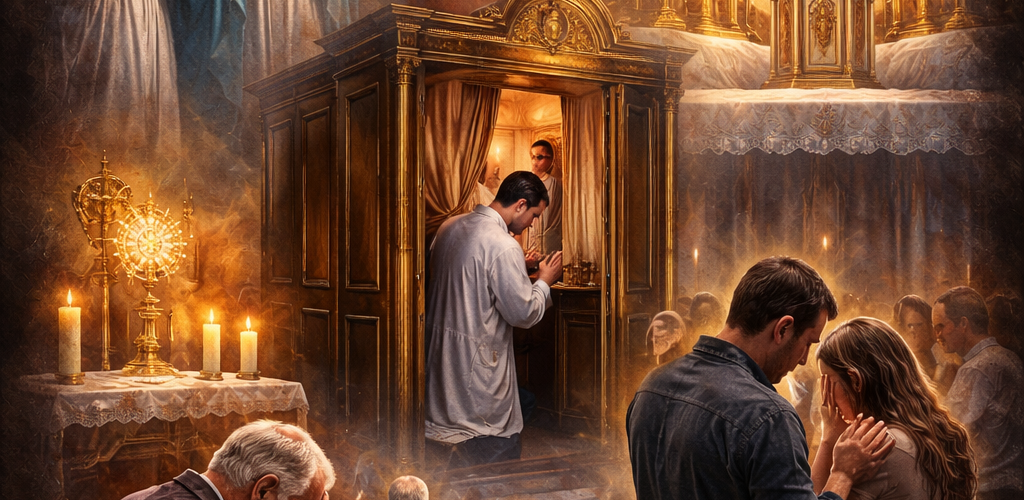
Understanding the Confiteor: What It Forgives and What It Doesn’t


Understanding the Confiteor: What It Forgives and What It Doesn’t
At the beginning of every Catholic Mass, the faithful recite a powerful prayer that often passes by without much reflection—the Confiteor, or “I confess to almighty God.” Though brief, this prayer carries deep spiritual meaning. It invites us to acknowledge our sins, express sorrow, and prepare our hearts for worship. But many people still wonder: Does this prayer forgive sins? Can it replace confession?
Let’s take a closer look.
What Is the Confiteor?
The Confiteor is part of the Penitential Act at the start of Mass. Its purpose is simple yet profound: to recognize our sinfulness before God and the community. In it, we admit that we have sinned in thoughts, words, actions, and omissions, and we ask for prayers from the Blessed Virgin Mary, the saints, and one another.
This moment sets the tone for the entire Mass. Before we approach the Eucharist, we first approach God with humility.
I confess to almighty God
and to you, my brothers and sisters,
that I have greatly sinned,
in my thoughts and in my words,
in what I have done
and in what I have failed to do,
through my fault, through my fault,
through my most grievous fault;
therefore I ask blessed Mary ever-Virgin,
all the Angels and Saints,
and you, my brothers and sisters,
to pray for me to the Lord our God. Amen.
What Sins Does It Forgive?
The Confiteor does bring about forgiveness—but with an important distinction.
It forgives venial sins, which are lesser sins that weaken our relationship with God but do not completely break it. These might include small acts of impatience, minor dishonesty, or neglecting prayer.
However, the Confiteor does not forgive mortal sins. This is a key point often misunderstood.
Venial vs. Mortal Sin: What’s the Difference?
Understanding sin helps clarify why the Confiteor has limits.
Venial sins are minor offenses. They damage our relationship with God but don’t destroy it. These can be forgiven through prayer, acts of love, receiving the Eucharist, and the Confiteor itself.

Mortal sins, on the other hand, are serious. They completely separate us from God and require three conditions:
- Grave matter
- Full knowledge
- Deliberate consent
Examples might include serious harm to others, grave dishonesty, or knowingly rejecting God’s commandments.
Because of their seriousness, mortal sins require something more.
Can the Confiteor Replace Confession?
The short answer is no.
While the Confiteor is meaningful and effective for venial sins, it is not a substitute for the Sacrament of Confession. For mortal sins, Catholics are called to go to confession, where they personally confess their sins and receive absolution through a priest.
Think of the Confiteor as preparation—it helps cleanse the heart, but it does not replace the deeper healing that comes through confession.
Why the Confiteor Still Matters
Even with its limits, the Confiteor remains incredibly important.
It reminds us that:
- We are all sinners in need of grace
- We take responsibility for our actions (“through my fault…”)
- We rely not only on God, but also on the prayers of the Church
It prepares us spiritually to receive Christ in the Eucharist with a sincere and humble heart.
What If You’re Afraid to Go to Confession?
You’re not alone. Many people feel nervous or even afraid of confession. But it’s important to understand what confession truly is.
It is not about judgment—it is about mercy and healing.
Priests are bound by absolute confidentiality and are there to guide you, not condemn you. If you’re anxious:
- Start simple and be honest
- Write your sins down beforehand
- Go to a priest you feel comfortable with
Most people find that after going once, the fear fades—and is replaced by peace.
Final Thoughts
The Confiteor is a beautiful and meaningful prayer that invites us into humility and repentance. It forgives venial sins and prepares us for deeper communion with God. But it does not replace confession, especially when it comes to serious sins.
Both the Confiteor and confession have their place in the life of a Catholic. Together, they form a path of continual conversion—turning away from sin and back toward God’s mercy.

